The Kerbside Reality Check: Designing UK Packaging for What Councils Actually Collect
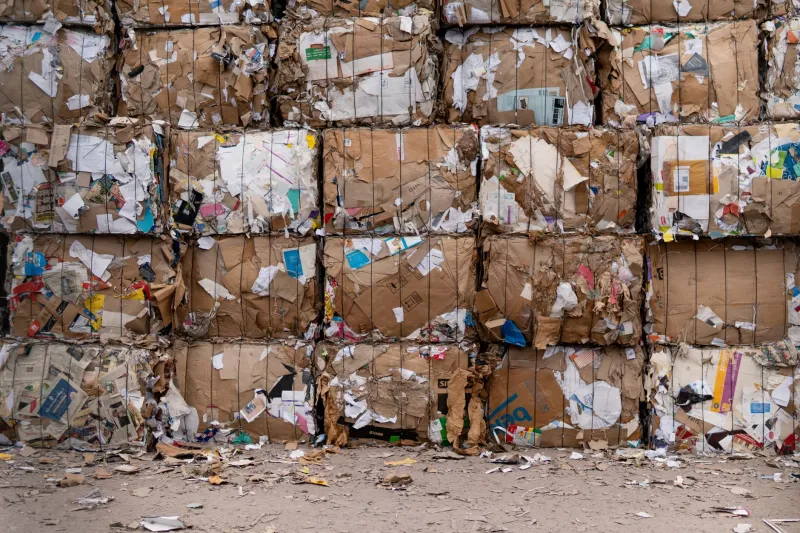
When a parcel arrives, the unboxing is brief; the disposal is the lasting interaction. For UK businesses, packaging design must consider not just protection but the end-of-life journey through kerbside collections. A box that survives the delivery network but confounds the householder on bin day has failed a critical test. This article explores how to design packaging that works with the UK's kerbside reality, balancing protection with practical disposal.
The gap between claim and collection
Many packaging items carry recycling symbols, but these do not guarantee acceptance by every local authority. The On-Pack Recycling Label (OPRL) provides a useful guide, yet it reflects broad national criteria rather than the specific rules of each council. A material may be technically recyclable, but if the local kerbside scheme does not collect it, it will end up in residual waste. This discrepancy between design intent and collection reality is a common source of confusion for households and a reputational risk for businesses.
In 2026, with increasing scrutiny on packaging waste and the implementation of extended producer responsibility (EPR) reforms, the gap between claim and collection is under sharper focus. Businesses that design for actual kerbside acceptance, rather than theoretical recyclability, are better placed to meet both regulatory expectations and consumer trust.
What kerbside collections actually accept
While schemes vary, most UK councils collect flattened cardboard, paper, plastic bottles and pots (with some exceptions), metal cans and glass. Materials commonly excluded from kerbside recycling include soft plastics (such as film and bubble wrap), polystyrene, composite laminates and compostable plastics. Even within accepted categories, preparation matters: cardboard must be flattened, plastic bottles emptied and rinsed, and components separated where necessary.
Designers should therefore aim for the lowest common denominator: materials and formats that are widely accepted and easily prepared. This reduces the risk of a well-intentioned household contaminating a recycling stream or abandoning the effort altogether.
Mixed-material traps
The most common kerbside failures arise from mixed-material construction. A cardboard box with a plastic window, a padded envelope with paper and plastic layers, or a laminated pouch combining foil and film all require separation that many householders will not attempt. Even if technically separable, the effort involved often leads to disposal in the general waste bin.
Where mixed materials are unavoidable for protection or product integrity, design for easy separation. Perforations, pull-tabs or clear instructions can help, but the simpler solution is often to avoid the combination altogether. Mono-material designs, such as all-paper or all-plastic (where plastic is accepted), are more likely to be recycled correctly.
Tape, labels and the separation problem
Adhesive tape and labels are small components with a disproportionate impact. Plastic tape on cardboard can interfere with recycling if not removed; many householders do not realise it needs to be taken off. Paper-based tapes are a better choice, as they can be recycled with the cardboard, but they must still perform reliably across seasonal conditions. Similarly, paper labels with water-based adhesives are preferable to plastic or metallic labels that may contaminate the paper stream.
Where tape removal is necessary, communicate it clearly and make it easy: a tape that peels off in one piece is more likely to be removed than one that tears into fragments. Consider also the size of labels: oversized labels can make flattening difficult and may obscure recycling instructions.
Communicating disposal without clutter
Clear disposal instructions are essential, but they must not overwhelm the unboxing experience. Overly complex messaging can confuse or deter. The most effective approach is simple, direct language combined with recognised icons. For example, a line such as 'Flatten box and recycle with kerbside collections' is straightforward and actionable.
Avoid ambiguous symbols or claims that could be misinterpreted. If a component must be separated, state it plainly: 'Remove tape before recycling'. Place instructions where they will be seen before disposal, such as on the inside flap or the base of the box, rather than on a leaflet that may be discarded with the packaging.
A design checklist for kerbside compatibility
- Prioritise mono-materials where performance allows.
- Avoid mixed-material laminates unless separation is intuitive and clearly explained.
- Choose paper-based tapes and labels that can be recycled with cardboard, or design for easy removal.
- Design for flattening: avoid rigid inserts or excessive void fill that prevents compression.
- Make separation easy with perforations or tear strips if components must be divided.
- Use clear, concise disposal instructions in plain English, supported by OPRL icons.
- Verify acceptance with local councils or OPRL guidance, and test with real households to identify confusion points.
- Consider the full journey: from delivery and unboxing to storage and bin day, ensuring the packaging remains manageable throughout.
Conclusion
The bin day test is a practical measure of packaging design success. By focusing on what councils actually collect and how households actually behave, UK businesses can reduce contamination, improve recycling rates and strengthen their sustainability credentials. Protection and kerbside compatibility need not be mutually exclusive; with thoughtful design, packaging can perform well in the delivery network and at the kerbside.