Presentable and Postal-Proof: Setting a Packing Standard for Product Samples
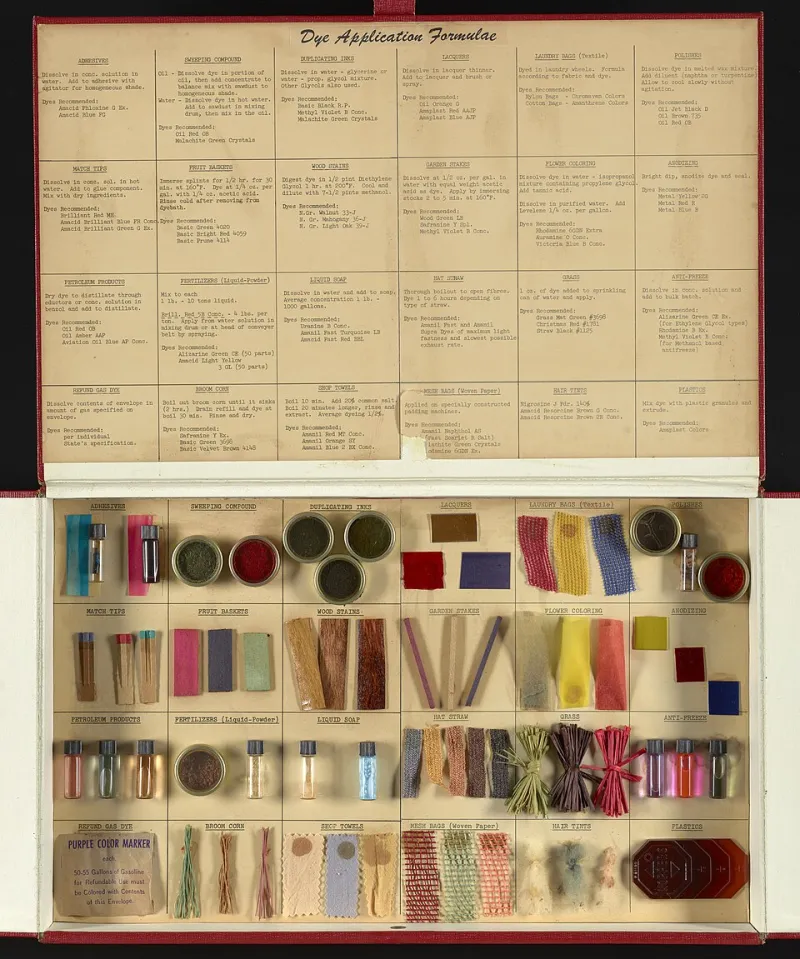
Photo: American Aniline Products, Public domain, via Wikimedia Commons
A sample parcel carries an unusual burden. It is despatched in quantities that never justify a bespoke packaging run, yet it is inspected more closely than almost any other consignment a business sends. A buyer opening it at a desk in a London showroom, a journalist unboxing it on camera, or a merchandiser collecting it from a stand at the NEC will all form a judgement within seconds — and that judgement will be about the product, even when it is really about the box.
The temptation is to solve this with surplus: oversized cartons, lavish void fill, ribbon and tissue used as insurance against damage. The result is a sample that costs more to send than the margin can bear, arrives heavy with packaging rather than product, and often still fails somewhere in the courier network. A better approach is to treat samples as their own category with a defined, modest standard.
Begin with the route, not the box
Sample consignments follow three broadly different journeys, and each imposes its own constraints.
The first is the buyer's inbound route: a parcel arriving at a retail head office mailroom, logged, scanned and carried to a desk. Here the parcel is usually opened with a knife in a working environment, in front of colleagues who are not there to admire the packaging. Clarity and speed of access matter more than theatre.
The second is the trade-show route. Samples travel by van, often in trade cases, and are handled repeatedly by stand staff, contractors and visitors. Packaging has to survive being opened and closed dozens of times over three or four days without losing its shape.
The third is the press and influencer route, where the unboxing is itself the content. Presentation carries more weight, but the parcel still passes through the same sorting hubs and doorstep conditions as any other delivery.
Mapping a sample against these three routes before specifying anything prevents the common error of over-engineering for one and under-protecting for another. A single standard can usually serve all three if it is built around the most demanding element of each: robust outer, tidy inner, clear labelling.
Use a short ladder of stock sizes
Low-volume despatch punishes bespoke cartons. Tooling and minimum order quantities swallow the benefit, and a business ends up holding several hundred units of a size it needs twelve of. The practical answer is a small ladder of stock outer cartons — typically three sizes — into which the product is fitted using a modest amount of protective material.
The aim is a parcel with no more than two to three centimetres of clearance on any side once packed. Beyond that, protective material stops protecting and starts merely occupying space, adding dimensional weight and cost without improving survival. Below it, protection becomes compromised.
Where a product genuinely sits between sizes, adjust the internal fit with a simple corrugated insert or a folded fitment rather than moving up a carton size. Inserts can be cut from stock board to the required dimensions, are cheap at low volumes and give the sample a settled, deliberate feel when opened.
Protect for the journey, present for the bench
Sample protection should address the two events that cause most damage: a drop onto a hard surface and sustained vibration in a sorting hub. Both are handled by keeping the product away from the carton walls and preventing movement within the parcel.
For most samples, a combination of a board or moulded pulp fitment and a light, clean void fill is sufficient. Paper-based void fill is generally preferable to loose beads for this application: it holds position, looks tidy when the parcel is opened and can be placed in kerbside recycling by the recipient in most UK local authority areas. Air pillows work well for lightweight items but should be sized so that they do not migrate.
Where the sample is itself the presentation — glassware, cosmetics, small electronics — consider an inner presentation box that fits snugly inside the outer carton. This gives a clean reveal on the desk and absorbs handling on the stand, and it can often be reused to send the item onward for photography or press review.
Avoid sealing presentation elements with permanent adhesive. A buyer who wants to examine the product without destroying the packaging will appreciate a tissue wrap or a paper band held with a low-tack label rather than a taped seam.
Label clearly, twice
Samples are disproportionately likely to be mislaid because they arrive at large sites where nobody is expecting them, or at venues where dozens of similar parcels arrive in a single morning.
Include a second address label inside the carton, on the product packaging or on the insert itself. Where the parcel is destined for a trade stand, add the stand number and the name of the exhibiting company in a second position on the outer carton, not only in the primary address block.
For the outer label, use a clear, correctly sized barcode and keep it flat and unobstructed. Sample despatch is often handled by staff who do not run the main packing line, so the labelling convention should be written down and posted at the bench rather than passed on verbally.
Design for the return leg
A meaningful proportion of samples come back — from buyers who have finished evaluating, from press who have photographed the item, from stands being packed down. A parcel that cannot be resealed ends up wrapped in tape and bubble wrap at the eleventh hour and frequently arrives damaged.
A peel-and-seal strip on the outer carton, or a paper tape that can be re-applied across the original seam, makes a material difference. Including a pre-printed return label inside the parcel, with the sender's address and any reference the business uses to track samples, reduces the loss rate and the administrative follow-up considerably.
Keep the standard small and written down
A sample packing standard does not need to be elaborate. It needs to be short enough that anyone in the business can follow it and specific enough that two people packing the same product produce similar parcels.
A workable version covers: the stock carton sizes and the product families assigned to each; the protective material and its placement; whether an inner presentation box is used; the labelling convention including the internal label; the reseal method; and the return label routine. Photograph a correctly packed example for each product family and keep the images with the specification.
Review the standard annually, and whenever a new product family is added. Samples are a small line in most packaging budgets but an outsized one in first impressions — worth the modest effort of getting them consistent.
TRM Packaging supplies stock cartons, inserts, paper void fill and labelling consumables suited to low-volume sample despatch. Businesses reviewing their sample standard are welcome to discuss sizing and protection options with the team.