The Unboxing Promise: Engineering Gift Presentation to Survive the Courier Network
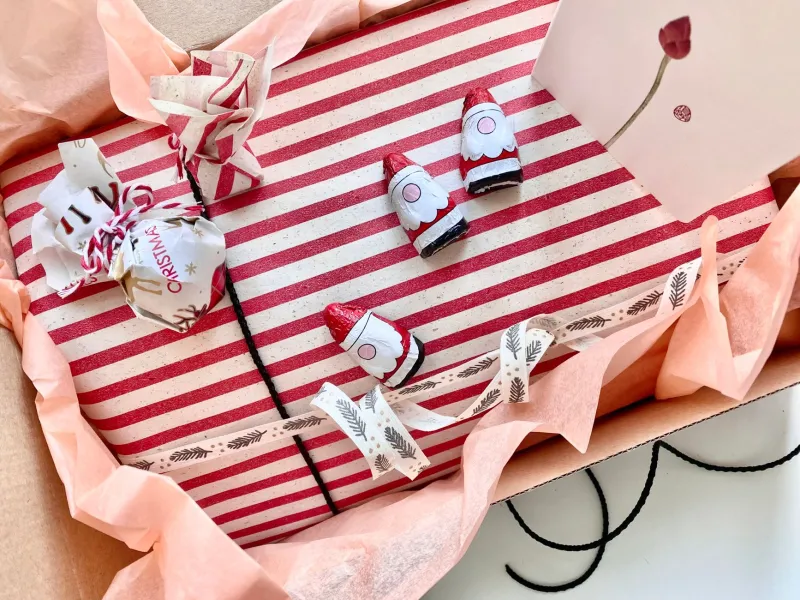
A gift-wrapped parcel has two jobs, and only one of them is visible on a product page. The first is to present the item as something considered: the rigid box, the folded tissue, the ribbon tied with intent. The second is to arrive in that condition after passing through a sorting hub, two or three van loads and a doorstep in the rain. The first job is usually designed. The second is frequently assumed.
The assumption is understandable. Presentation packaging is bought for how it looks in a photograph, and the photograph is taken in a studio. The parcel network, by contrast, is indifferent to intent. It compresses, tumbles, snags and occasionally soaks. If gift presentation is to hold its promise, it must be specified like protective packaging: with a defined load path, a defined failure mode and a test that happens before December rather than during it.
What the journey actually does to a gift
The first hazard is mechanical. Parcels move through chutes, conveyor transitions and roll cages, and are consolidated into van loads where heavier items sit above lighter ones. A rigid box with a lid that lifts cleanly on a shelf may separate under repeated compression. A ribbon tail left loose will find the one edge in a sorting hub capable of catching it. Tissue paper, which holds its shape when folded over a hand, settles and creases once it has been vibrated for two hours.
The second hazard is environmental. UK winters deliver damp doorsteps, wet gateposts and the occasional hour on a paving slab. Coated board resists water well; uncoated tissue, satin ribbon and glued paper bands do not. Water wicks along fibres rather than through them, so the first sign of ingress is often a tidemark on the tissue rather than a visibly wet box.
The third hazard is human. A recipient lifts a parcel by the ribbon, opens it on a kitchen table with a knife, and judges the result in seconds. If the presentation has shifted in transit, the judgement is made on the packing bench's behalf, and it is rarely generous.
The components and where they fail
Rigid boxes. Corners crush first. Dark litho laminates scuff against each other and against corrugated neighbours. Magnetic closures can pop under sustained compression, particularly where the magnet pair is undersized for the lid weight.
Tissue. The main failure is settling rather than tearing. Loosely placed tissue collapses, leaving the item resting on the base and a visible void where volume was intended.
Ribbon. Snagging is the practical risk; dye transfer onto pale board is the reputational one. Satin shows every crease, while grosgrain recovers better but is more abrasive against print.
Sleeves and belly bands. These slide along the box walls during vibration. A band that covers the closure on the bench may sit over the corner by the time it reaches the doorstep.
Four specification rules
- Contain the bow. A bow should be tied so its tails cannot exceed the box footprint, or protected by a sleeve. Loose tails are the single most common cause of presentation damage.
- Separate decoration from the load path. Presentation elements should not carry weight. The item should be restrained by an insert or fitment, with ribbon and tissue as finishing rather than support.
- Seal against weather, not merely against opening. This usually means a coated outer, a paper tape with a secure adhesive, and a closure that cannot lift at the edge.
- Design for the doorstep, not the shelf. Test the pack after it has been handled, not as it leaves the bench.
When a gift-ready outer is genuinely cheaper
Wrapping at the bench appears inexpensive because the materials are bought in bulk and the labour is already employed. That accounting omits three costs: the minutes per order during peak, the rework rate when temporary staff are wrapping at speed, and the replacement rate when presentation arrives damaged.
A workable comparison takes the form of a per-parcel cost that combines materials, labour minutes at the peak rate, rework, and the cost of replacements or goodwill gestures. Wrapping by hand at 20,000 orders in December is rarely the cheap option once those four lines are included.
A gift-ready outer is generally worth the tooling and minimum order when presentation on every order is a brand requirement, when peak volumes make bench labour a premium cost, and when the pack can remove a secondary operation entirely. It is generally not worth it when presentation is applied to a minority of orders, or when the outer would still need to be placed inside a protective overbox to survive, which restores the double-handling the change was intended to remove.
A December test routine
Run the following in November, on the actual production pack, not a prototype.
- Transit simulation. Ship ten parcels through the live network to staff addresses, including at least two to rural routes.
- Compression and vibration. Stack parcels under representative weight and subject them to a sustained vibration cycle; a shaker table or a long van journey both work.
- Snag test. Draw a ribbon tail through a rough-edged aperture under light tension. If it catches, redesign the closure.
- Rain and doorstep. Place a parcel outdoors in light rain for twenty minutes on a wet surface, then open it and inspect for wicking into tissue and print.
- Open and reclose. Ask recipients to open the parcel as a customer would and to repack it for return. Presentation that cannot survive a return journey has a second problem behind the first.
- Timed bench trial. Measure seconds per parcel and error rate with staff who have not used the pack before, since that is who will be packing in December.
Record the results and hold the specification against them. Presentation packaging that has not been tested is a hope, not a specification.
Signing off
The final step is to treat the gift-ready pack as a controlled specification: a documented bill of materials, a defined closure method, a named owner and a tested record. That discipline is what allows a ribbon to survive the sorting hub and still look as though it was tied by hand. TRM Packaging works with UK businesses to specify presentation packaging that performs on the doorstep as well as it does on the product page.