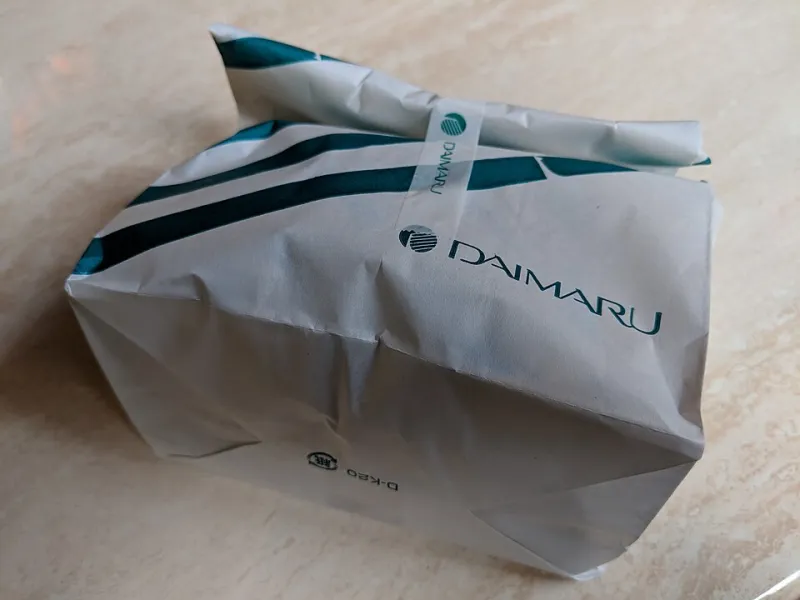
The Second Journey: Designing Packaging for the UK's January Returns Window

Photo: Unknown, Public domain, via Wikimedia Commons
January returns are not a mirror image of December dispatches. The outbound parcel leaves a controlled packing bench with the right box, the right tape and a label applied flat. The return often begins on a kitchen table, is resealed by hand, and enters the network through a parcel shop, locker or collection point. Packaging designed only for the first journey can fail on the second, and the cost shows up as replacements, refunds, customer service time and wasted labour.
For UK SMEs, the commercial case for return-ready packaging is strongest in categories with predictable return rates: fashion, footwear, gifts and small electronics. The aim is not to over-engineer every parcel. It is to make the second journey a planned part of the pack specification.
Why the return leg is a different logistics problem
A returned parcel is handled more times than a typical outbound parcel. It may be opened roughly, compressed in a cage, stored overnight and scanned at several points. The original outer bag may have been torn open; the original box may have been kept but not the tape. If the packaging cannot be closed securely, the item moves inside the pack and arrives damaged or, worse, leaves the pack altogether.
This is why a mailer that opens neatly is not automatically a good returns mailer. The opening experience and the resealing experience need to be designed together. A clean tear strip is useful only if there is a second adhesive line, a reliable closure or a label pocket that keeps the return label attached.
Start with the products that actually come back
Return-ready packaging should follow returns data, not intuition. A business shipping a mixed range may find that one SKU accounts for a disproportionate share of returns. Begin with the highest-return lines and the highest-value lines. Low-return, low-value items may not justify a more expensive pack.
A simple matrix helps: return rate by product group, average order value, fragility and likelihood of repeat purchase. The first two columns identify where a failed return pack is expensive. The second two identify where protection matters. The output is a short list of packs to redesign before the January window.
Resealable mailers: a practical default for soft goods
For clothing, textiles and other non-fragile items, a resealable mailer is often the most efficient return-ready format. Look for a dual adhesive strip: one line for the original seal and a second for the return. A gusseted mailer gives volume without forcing the item into a tight fit. A water-resistant finish is worth considering for UK winter conditions, particularly where parcels may wait in exposed collection points.
The limitation is protection. A resealable mailer is not a substitute for a box when the product needs cushioning or rigid support. It also needs a clear size range. Too large a mailer allows movement; too small a mailer puts stress on the closure. The right answer is usually two or three sizes covering the core range, not a single universal bag.
Reinforced closures and a clear opening route
Where a box is used, the closure should survive being opened and closed again. A reinforced tear strip, a dual-lock adhesive or a simple hook-and-loop closure can work, provided the pack still looks secure on arrival. Avoid designs that require the customer to find tape or a stapler. The return should be possible with the materials already in the pack.
Opening instructions matter. A short printed line on the inside of the flap, or a QR code linking to a returns page, reduces damage caused by customers cutting through the product. The same area can hold the return label or a label pocket. This is not a marketing flourish; it is a lower-cost way to reduce errors.
Integrated return labels reduce friction and mis-scan
An integrated return label, whether pre-printed, peel-back or accessed by QR code, removes a common failure point: the customer cannot print a label. For UK SMEs selling through multiple channels, a label that works with the chosen carrier network is essential. Royal Mail, Evri and InPost lockers each have different handling requirements, and the label must remain flat and scannable after the pack has been opened.
A label pocket can be a good compromise where pre-paid labels are not cost-effective. The customer inserts the carrier label, and the pocket protects it in transit. Whichever route is chosen, test the barcode after the pack has been opened and resealed. A label that scans perfectly on the packing bench may fail after a crease or a damp journey.
Simple stress tests before the January rush
A small trial is more useful than a long specification document. Take ten to twenty packed orders from the highest-return lines and run a short test protocol:
- Reseal the pack three times, using the intended customer method.
- Drop the pack from waist height onto a hard floor, once on a face and once on an edge.
- Stack several packs to simulate cage storage.
- Expose the pack to light rain or a damp surface for a short period, then check the closure and label.
- Scan the return label after resealing.
- Send a sample through the actual returns route if volume allows.
Record what fails. A split closure, a torn label or a product that moves inside the pack is a specific fix, not a reason to add more material everywhere.
The cost case is a round-trip calculation
A cheaper mailer can be the more expensive choice if it fails on the return leg. The relevant figure is cost per successful round trip, not cost per unit. Include the pack cost, the labour time to pack and repack, the replacement or refund cost, and the customer service time. For high-return categories, a modest increase in pack specification can be justified by a small reduction in failed returns.
That does not mean every parcel needs a premium returns pack. The discipline is to segment: return-ready packs for the lines that need them, standard packs for the rest. This avoids the twin errors of over-packaging and under-protecting.
A short implementation checklist
Before the January returns window, UK SMEs can take five practical steps: review returns data by product group; select two or three return-ready formats; trial them on the highest-return lines; train the packing team on the new closure and label; and update the returns instructions so customers know how to reseal and return. The pack should make the second journey obvious, not improvised.