Grip, Balance, Open: Designing Parcels for the Realities of UK Handling

Parcels are usually specified by dimensions, board grade and cost per unit. Those measures matter, but they do not describe what happens at the point of collection, during a doorstep handover or when a customer tries to open a box while holding the door. A parcel that is awkward to lift, liable to shift or difficult to open creates friction for everyone in the chain. In 2026, with UK households accustomed to frequent deliveries and courier rounds under time pressure, handling quality is part of service quality.
Why handling belongs in the packaging specification
Packaging is the interface between an operation and its customer. It is also the object a courier must grip, stack, scan and carry. A simple diagnostic can expose design issues before they become damage claims or negative reviews: can an average adult lift, carry and control the parcel with one hand while using the other for a scanner, doorbell or keys? This is not a formal standard, and it should not replace transit testing. It is a practical check that reflects the real conditions of UK delivery.
For small and medium-sized businesses, the cost of poor handling appears in several places. Goods may be damaged before they reach the doorstep. Couriers may record exceptions because a parcel is too awkward to manage safely. Customers may struggle to open a box without scissors or may find that inner packing spills onto a wet path. Each of these outcomes affects repeat business more than many specifications acknowledge.
Running a single-hand handling check
Choose a representative packed order rather than an empty box. Fill it to the normal weight and use the same inner packing as a live dispatch. Place the parcel on a waist-height bench. Lift it with one hand at the point where a handler would naturally grip. Carry it for around ten metres, pause to simulate scanning or ringing a doorbell, then lower it to the ground. Finally, open it while standing at a doorway.
Record what happens. Does the hand find a secure grip, or does it slide on smooth tape? Does the contents shift when the parcel is tilted? Does the box flex or the lid lift? Does opening require a tool, or can it be started by hand? A short written record is more useful than a general impression. Repeat the check with a wet hand or a light glove if those conditions are realistic for the route or the customer.
Proportion and weight distribution
A long, shallow box can feel heavier and less controllable than a compact parcel of the same weight. The centre of mass moves away from the body, and the handler has less leverage. Where possible, keep the heaviest item near the centre of the parcel and low within it. Internal fitments, paper cushions or corrugated inserts should prevent movement rather than simply filling empty space.
Loose void fill can make a parcel feel unstable even when the outer box is strong. If contents slide from one end to the other, the handler will feel the shift and may grip harder or change position. In some cases, splitting a mixed order into two smaller parcels can reduce handling damage and improve the customer experience, although the trade-off in cost and packaging volume must be assessed. The aim is not more packaging, but better-balanced packaging.
Grip points, tape and closures
Tape placement affects handling more than it is often given credit for. A large face covered in smooth plastic tape offers little friction. A paper tape with a slightly textured surface may provide a more secure grip, provided it meets the required closure performance. Tape should be positioned so that it reinforces seams without creating a slippery panel where a handler would naturally hold the box.
Handholds can help, but only when they are designed and rated for the weight. A die-cut handle in a light mailer may be useful; the same handle in a heavy box may tear or encourage unsafe lifting. Reinforced handholds, finger holes and lid overlaps should be checked with the packed weight in mind. Edges also matter. A box that crushes at the corners when gripped will feel less secure and may lose structural strength during the journey.
The doorstep opening experience
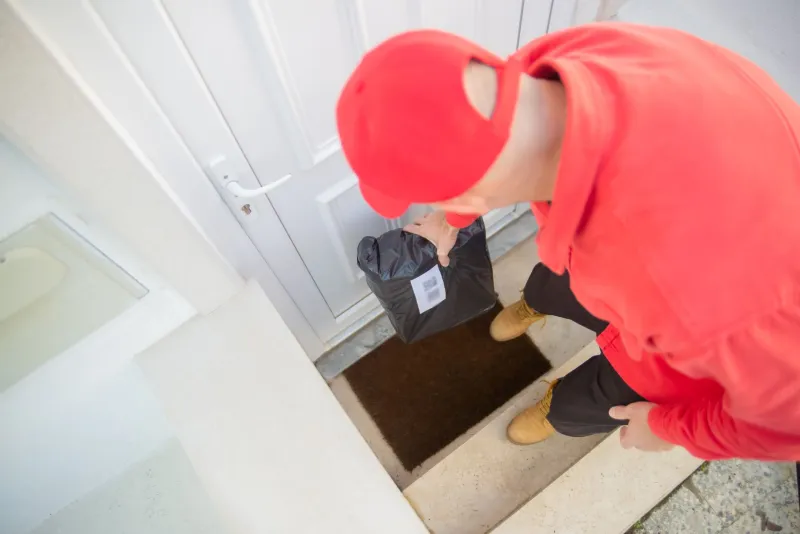
Opening is part of handling. A customer may be standing in the rain, holding a door open or managing a child or pet. Tape that covers the whole lid without a clear starting point can turn a simple task into a struggle. A tear strip, perforation or deliberate tape layout can make the opening sequence obvious without compromising security.
Inner packing should not spill out as soon as the lid is released. Small components should be contained in paper bags, card wallets or fitments that keep the order together. If the parcel is likely to be returned, consider whether it can be reclosed easily. A clean opening experience reduces accidental damage and makes the product feel better presented, even when the outer packaging is modest.
Turning the check into a specification decision
Handling criteria can be added to the packaging sign-off without creating a complex programme. Note the intended lift point, the acceptable balance of the packed order, the opening method and any handhold requirements. Review these points when products change, when order mixes shift or when seasonal volumes bring temporary staff onto the packing bench.
Courier feedback is also valuable. Drivers and warehouse handlers see parcels in conditions that a desk-based review cannot reproduce. A short conversation about which boxes are awkward to carry or stack can reveal a design issue before it appears in damage statistics.
Small changes often produce disproportionate improvements. Reducing a box length by a few centimetres, repositioning a heavy item, changing tape placement or adding a clear opening point can make a parcel easier to handle without a major increase in packaging cost. The discipline is to test those changes with the packed order, not just the empty pack.
Good packaging protects goods. Better packaging also allows people to handle goods confidently. A brief handling check, carried out before a specification is approved, helps UK businesses design parcels that work for the courier, the customer and the operation behind them.