Rain-Ready Parcels: Protecting Goods on the UK Doorstep
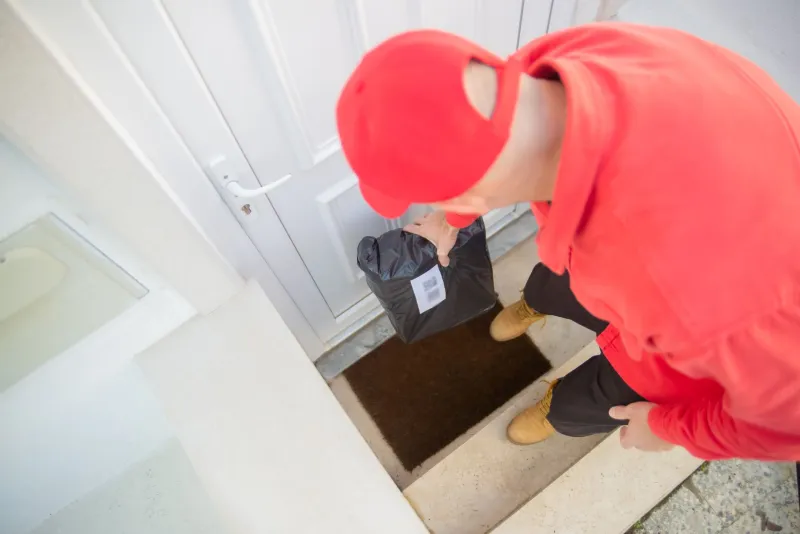
A parcel's journey rarely ends when the van door opens. In the UK, many consignments spend time on a doorstep, in a porch, beneath a hedge or beside a wheelie bin before the recipient picks them up. That interval may be brief, but it can coincide with drizzle, driving rain or damp ground. Packaging specifications often concentrate on compression, abrasion and transit handling; moisture exposure is frequently treated as an afterthought. For businesses balancing cost, presentation and environmental commitments, that gap is worth addressing.
How moisture reaches a paper-based pack
Corrugated board is a paper sandwich: linerboards either side of a fluted medium. Its strength depends on the board remaining relatively dry. When water reaches exposed edges, it wicks into the flutes and softens the structure. A box that felt rigid on the packing bench can lose compression strength quickly, particularly at corners and along seams. Repeated dampness followed by drying may also cause cockling, delamination and print spoilage.
Paper tape presents a different weak point. Gummed paper tape can perform well in dry conditions, but prolonged dampness may soften the adhesive or cause the tape to lift at seams. Pressure-sensitive paper tapes vary considerably; some resist light moisture better than others, but none should be assumed waterproof without evidence. Paper-based void fill, such as crumpled kraft or honeycomb paper, can collapse when damp and may transfer moisture to the product. Labels are another consideration: direct thermal labels, in particular, can smudge or lose contrast if they become wet.
The practical risk is not usually a parcel sitting in a downpour for an hour. It is a combination of light rain, a wet doorstep, a shaded porch and a delay of twenty or thirty minutes before collection. That is enough to test the outer layer of a paper-based pack.
The weak points in a paper-based pack
Most moisture-related failures begin at the edges and seams. A box with an exposed flue at the top or bottom is more vulnerable than one where edges are protected by a tight fold or an overlapping lid. Tape that stops short of the seam leaves a channel for water. Labels placed across a seam can lift if the underlying board swells. Printed areas may show water marks even when the product inside remains dry.
Void fill needs separate attention. Paper void fill is effective for cushioning in dry transit, but it is not a moisture barrier. If a product is sensitive to damp, paper cushioning alone may not be sufficient. The same applies to paper wraps and tissue: they can absorb water and hold it against the product surface.
A practical wet-doorstep test
The aim is not to replicate a laboratory conditioning chamber. It is to establish whether a given pack survives a realistic short exposure without compromising the product or the customer's first impression.
Take two identical packed parcels. Keep one indoors as a control. Place the test parcel on a clean tray in a porch or sheltered outdoor position during light rain for ten minutes. If rain is not available, mist the parcel evenly from about 30cm with 200ml of water from a spray bottle, then leave it for fifteen minutes. Inspect the outer for soft edges, seam lift, tape failure, label damage and print transfer. Open the parcel and check whether moisture has reached the void fill or product. Record the result with photographs and repeat the test for each major pack format and courier route.
This test is a screening exercise, not a substitute for a full transit trial. It is most useful when comparing two specifications or checking a seasonal change. Keep the method consistent so that results can be compared over time.
Protect without over-packing
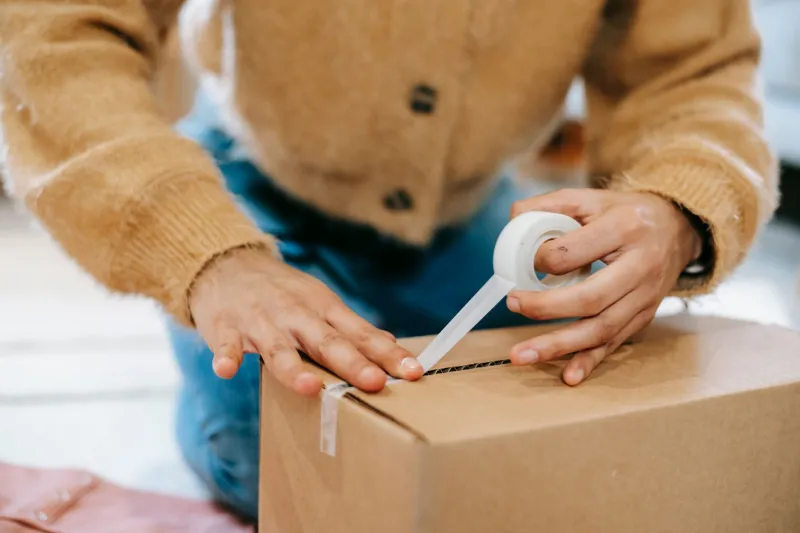
Right-sizing remains the first defence. A smaller box presents less exposed surface and fewer voids for water to enter, although it must still provide adequate cushioning. Ensure that tape runs fully across seams and overlaps where the lid meets the box. Use labels that are appropriate for damp conditions, and avoid placing them over an open seam where possible.
For moisture-sensitive goods, consider a thin inner barrier rather than upgrading every outer to a weather-resistant specification. This might be a paper-backed barrier or a small recyclable film liner where local kerbside collections accept it; the key is to use the minimum necessary and to check claims with the supplier. Where paper void fill is retained, keep it inside an inner wrap or barrier rather than relying on it to protect against water.
When a weather-resistant outer earns its cost
A weather-resistant outer is not automatically the right choice. It adds cost, may affect recyclability and can encourage a false sense of security. The decision should rest on exposure likelihood, product sensitivity and the cost of failure.
A simple comparison helps. If the incremental cost of a weather-resistant outer is 15p per parcel and the fully loaded cost of a wet-damage failure—replacement, return handling, customer contact and lost goodwill—is £15, the break-even wet-exposure rate is around 1%. If a route or season has a higher failure rate than that, the upgraded outer may be justified. If the product is low-value and insensitive to damp, a robust standard pack with good sealing may be sufficient.
Weather-resistant outers are most defensible for high-value electronics, books, printed materials, cosmetics and subscription boxes containing paper goods. They are less likely to be justified for durable items in primary packaging that is already moisture-resistant. The specification should be described accurately: resistant to brief dampness is not the same as waterproof.
A seasonal protocol
During autumn and winter, review the routes and courier behaviours that create exposure. Ask whether safe-place instructions are clear, whether porch deliveries are common and whether labels remain readable after a damp doorstep. A short seasonal check—one pack format, one test, one recorded result—can prevent a recurring problem from becoming a peak-season complaint. The objective is not to eliminate every risk, but to match protection to the conditions a parcel is likely to meet.