Shelf, Trolley, Repeat: Testing New Packaging Against the Real Delivery Route
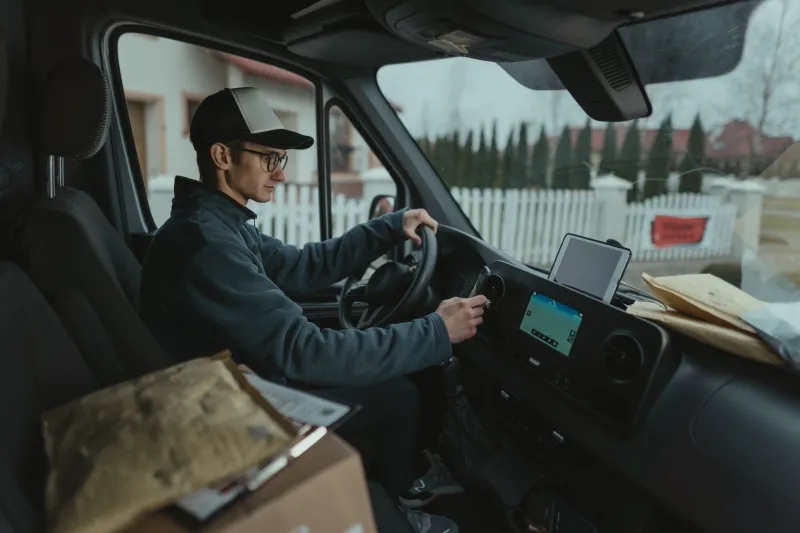
Most packaging specifications are proved in the warehouse. A case is packed on a bench, stacked on a pallet, moved by pallet truck and checked against a conveyor or racking bay. Those checks matter, but they are not the final test. For many UK businesses, the specification is really judged on a 3.5-tonne van, a shelf system, a route bag and a courier trolley. A case that performs well in a distribution centre can still fail on the road.
The warehouse is a forgiving environment
A warehouse tends to offer smooth floors, wide aisles, predictable stacking and equipment designed around pallet dimensions. The delivery route offers none of that consistency. Door apertures are narrower than expected, wheel arches intrude into the load space, shelf pitches vary between vehicle types and route bags impose their own internal dimensions. The same case may also be lifted and replaced dozens of times in a day, rather than moved once by mechanical equipment.
The result is a familiar pattern: a new specification passes a warehouse trial, then produces damaged corners, crushed lids, scuffed labels or awkward loading at the van. The problem is not usually the board grade alone. It is the relationship between the pack and the route.
Four constraints that deserve measurement
A useful van-shelf test begins with measurement rather than opinion. Nominal vehicle descriptions are not enough. A standard panel van from one operator may have a different shelf arrangement, door opening or wheel-arch clearance from a similar vehicle elsewhere. Where possible, measure the actual vehicles or the courier's standard load equipment.
The first constraint is clear shelf height. Measure from the shelf surface to the underside of the shelf above, or to the roof where no upper shelf is fitted. Include any shelf lip or retaining bar. A case that fits the shelf footprint but cannot be slid in without compressing the lid is not route-ready.
The second is the door aperture and the narrowest point inside the load space. This may be the rear door opening, a side door, a bulkhead opening or the space between wheel arches. A case may pass through the rear door but still fail to reach its intended position.
The third is the route bag or tote. Many courier rounds use bags or containers that are lifted in and out repeatedly. The internal dimensions matter, as does the ability to retrieve a case without pulling out several others. If the case is too tight, the route becomes slower and the pack is more likely to be handled roughly.
The fourth is trolley and sack-truck width. The toe plate, wheelbase and overall width of the handling equipment can determine whether a stack can be moved in one go or must be broken down. A case that is stable on a pallet may be unstable on a narrow trolley if its centre of gravity sits too high.
Build a route kit, not another pallet
A van-shelf test should use representative packs filled to production weight. Select the largest case, the heaviest case and any case with a shape that is likely to be awkward, such as a long, narrow carton or one with a high centre of gravity. If the range is broad, test the extremes first. There is little value in testing an average case that never appears on the route.
The test sequence should reflect the real journey. Load the cases in the order a route would require, stack them to the planned height and then retrieve them in delivery sequence. Repeat the load-and-retrieve cycle enough times to expose wear: ten to twenty cycles is a reasonable starting point for a pre-sign-off trial, depending on the value and handling frequency of the pack.
During the cycle, look for several failure modes. Check whether the case still slides cleanly from the shelf. Look for lid deformation, corner crushing, board delamination and label scuffing. Confirm that barcodes remain readable and that any handling instructions are still visible. If the case is opened and resealed on the route, include that action in the trial.
A simple audit routine for SMEs
A practical routine can be completed in a few hours and recorded alongside the specification. First, define the route profile: which vehicle types are used, which courier networks are involved, whether shelf systems or route bags are standard and which trolleys are available. Second, measure the clear dimensions and record the minimum figures rather than the average. Third, prepare sample packs at target fill weight and label them as trial units.
Fourth, run the load-and-retrieve cycle in a real vehicle or a accurately replicated load space. Fifth, apply a sustained load to the base case for the expected route duration, or use a bench compression check to confirm that the stack will not creep under the planned load. Sixth, review the pack for label visibility, ease of handling and stability on the trolley. Seventh, record a pass, conditional pass or fail result, with notes on the change required. A conditional pass should be retested before sign-off.
What to change when a case fails
Failure does not always mean a completely new pack. Sometimes a small reduction in height or footprint is enough to clear a shelf or route bag. In other cases, the answer is to split a large case into two smaller units, change the stacking orientation or reduce the top load. Where stacking strength is the issue, board grade, flute direction and corner protection may need review. Where repeated handling is the issue, the pack may need a stronger lid or a more robust closure rather than a thicker entire board.
The important point is to test the change against the same route conditions. A modification that improves warehouse stacking but makes shelf retrieval harder is not an improvement.
The sign-off question
The final question before signing off a new specification should not be whether the case fits a pallet. It should be whether the case survives the route. A van-shelf test provides evidence for that decision. It also creates a record that can be revisited when vehicles, courier networks or route bags change. In that sense, the delivery route is not an afterthought in packaging design. It is the constraint that should shape the specification from the start.