The Unit That Ships: Rethinking Packaging When Wholesale Cases Give Way to Single Parcels
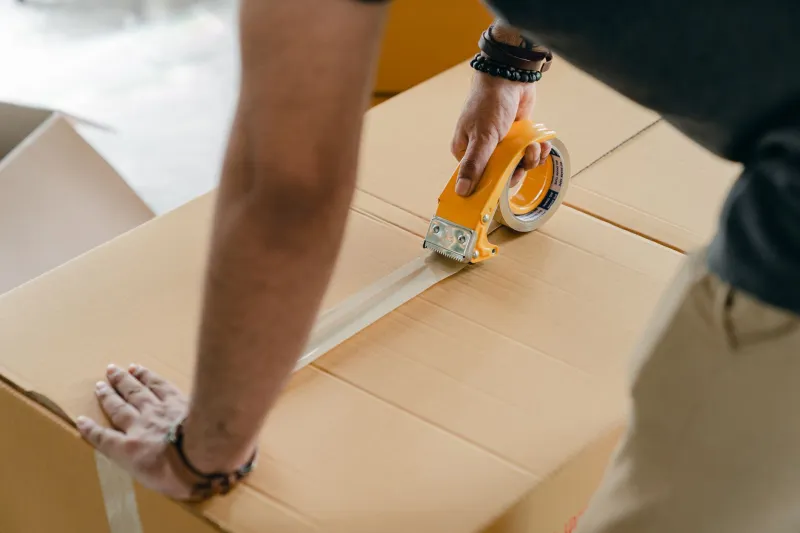
A wholesale operation and an e-commerce operation can sell identical products and still require entirely different packaging. The difference is not the product; it is the unit that leaves the building. As long as goods travel in cases, the case is the packaging, and the carton's job is largely to survive a pallet, a curtain-sided trailer and a forklift. The moment one unit becomes the shipping unit, the carton's job changes: it must survive a parcel network, a doorstep, a locker bank and, increasingly, a customer's own hands.
This transition is rarely planned as a packaging project. It usually arrives alongside a new sales channel, and the first pallet of single-unit orders goes out in whatever carton was nearest. That works for a week. It does not work as a specification.
The change of reference point
Most packaging specifications in a wholesale business are written against a case. Board grade, internal dimensions, closure method and stacking strength are all calibrated to a known quantity of product, a known pallet pattern and a known freight route. Those three anchors disappear when singles ship.
The practical consequence is that the specification is not merely outdated; it is answering a different question. A double-wall carton designed to bear the weight of twelve stacked cases above it is over-specified for a 900-gram parcel travelling alone, and the cost of that surplus board is paid on every order. Conversely, a single-wall carton selected because it survived a palletised journey may not survive the corner impact of a tote at a sortation hub.
The task, then, is to rebuild the specification from the product outwards rather than from the case inwards.
Reselecting the outer carton
Begin with the product as it will be presented: in its retail carton, with any shelf-ready packaging removed, at the exact dimensions and weight it will carry in a single order. Measure this unit and treat the measurement as the starting constraint.
From there, three decisions follow in sequence.
Internal dimensions. Allow a modest clearance for insertion and for any protective wrap, but resist the temptation to round up to the next standard size out of caution. A carton two centimetres too wide in each direction adds measurable volume on every order and invites the product to shift in transit. Where a product sits between two stock sizes, consider whether a new size is justified by volume or whether an adjuster — a crease line, a tear strip, a variable-depth design — can close the gap without a bespoke tooling commitment.
Board grade and style. The strength question is now about compression in a mixed tote and impact at a hub, not about stacking on a pallet. Single-wall grades are frequently adequate for parcels below a few kilograms, provided the carton is properly filled and the product is adequately cushioned. FEFCO 0201 cases remain the default for many lines, but a 0427 or a crash-lock base can reduce material and assembly time where the product suits it.
Print and identification. Wholesale cartons often carry minimal marking because the case label carries the information. Once the carton is the parcel, the label position, barcode placement and any handling icons all sit on the same face the customer will see. This is the moment to settle them properly rather than to inherit a layout designed for a pallet label.
Void fill: the space that did not exist before
In a case pack, void fill is usually absent because the case is the fit. In a single-parcel operation, void fill becomes a variable cost and a variable risk at the same time — too little and the product moves; too much and the carton bulges, the closure fails and the material bill rises.
Recalibrate the void fill by measuring the actual gap between product and carton wall on a sample of ten orders, not on the idealised product. Then choose a method that matches the gap and the product's fragility: paper void fill for light goods with modest gaps, air pillows where cushioning matters more thanimmobilisation, moulded or die-cut fitments where a repeatable, presentable unboxing is part of the offer. Whichever route is chosen, record the quantity per order so that the packing bench has a defined standard rather than a judgement call.
Closure and security: duties the case tape never had
Case tape was designed to hold flaps shut until the pallet arrived. Parcel tape is asked to hold flaps shut through automated handling, to resist being peeled back, and to signal whether it has been. That is a different duty.
Three practical points apply. First, match tape width and adhesive to the board surface; recycled-content boards with high fibre dust can defeat a low-tack adhesive, particularly in cold weather. Second, define a closure pattern — a single centre strip, an H-tape, or a strip plus a tamper-evident seal — and apply it consistently so that any deviation is visible. Third, consider whether the product's value warrants a tamper-evident closure at all; the cost is small per parcel and the reassurance is not.
Assumptions worth leaving behind
Certain habits travel with the wholesale mindset and cause difficulty in a parcel operation:
- That board grade can be judged by feel. It cannot. Ask for the specification, including the flute and the edge crush value, and compare it against the weight and fragility of the single unit.
- That a bigger carton is a safer carton. Extra volume increases movement, material use and, where dimensional charging applies, cost.
- That the packing bench will adapt. Temporary or seasonal staff need a written standard with the carton, void fill and tape specified, not a demonstration at the start of a shift.
- That one trial parcel proves the format. A single parcel sent across the yard proves nothing about a sortation hub.
Testing the new format before it becomes routine
Validation does not require a wholesale-sized exercise. A structured pilot of twenty to thirty parcels, dispatched through the live network to a mix of destinations including at least one locker and one returns journey, will expose most failures: closure lifting, corner crush, product movement, label smudging.
Before dispatching, run a simple drop sequence on a sample carton — base, corner and edge impacts from a height appropriate to the parcel's weight band — and open each one afterwards to inspect both the product and the carton's internal faces. Note what compressed, what split and where the tape began to lift.
Record the results against the specification, adjust once, and repeat. Only then should the format be written up and handed to the bench.
A short specification checklist
The document that emerges should fit on a single page per product family:
- Carton size, board grade and style, with the supplier reference.
- Product configuration as packed, including any retail packaging retained.
- Void fill type and quantity per order.
- Tape specification and closure pattern, including any tamper-evident element.
- Label position and orientation.
- The drop and pilot results that justified the above, with a review date.
A transition from cases to singles is, in packaging terms, a change of product. Treating it as one — with a fresh specification, a measured pilot and a written standard for the bench — is usually cheaper than discovering the gaps one customer complaint at a time.