The Third Handling: Packaging for Parcel Lockers and Click-and-Collect Counters

The growth of click-and-collect has changed the parcel journey more quietly than the shift to home delivery, but the packaging implications are just as real. In 2026, locker banks outside supermarkets, railway stations and petrol forecourts are familiar fixtures, while high street counters and convenience stores handle a steady flow of collected orders. For UK businesses, the packaging question is no longer only whether a parcel will survive transit. It is also whether it will fit the compartment, scan at the first attempt and present itself properly when a customer opens a locker door or approaches a collection desk.
Why the locker journey changes the brief
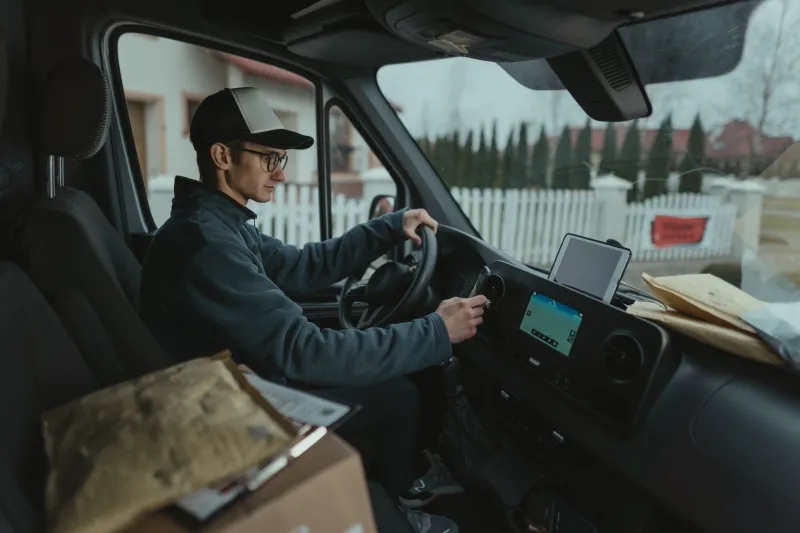
A parcel destined for a locker or a collection counter is handled more, not less. It passes through carrier sortation, is loaded into a locker bank or retail storage area, and may wait for hours or days before collection. Outdoor locker sites expose parcels to changing temperatures and, in many UK locations, to damp conditions. The customer then collects without staff assistance, often in a hurry and sometimes in poor light.
That extra stage creates three failure modes. A parcel that is slightly too large will not fit the compartment and becomes a failed handoff. A parcel that is poorly labelled may be delayed at the locker or counter because the barcode cannot be read. A parcel that is structurally weak may arrive scuffed, crushed or damp, even though it survived the carrier network. The packaging brief therefore needs to cover fit, durability and identification, not just protection in transit.
Size to the compartment, not to the shelf
Most UK locker networks publish compartment dimensions, and the figures are often quoted in three broad bands. Small compartments are commonly around 8 × 38 × 64 cm, medium around 19 × 38 × 64 cm and large around 41 × 38 × 64 cm. These are useful starting points, but they are not universal. Locker sites vary, carriers update their networks, and a specification that works for one provider may fail with another. Confirm current limits directly with each carrier before committing to a box range.
The practical rule is to design to the internal clear dimensions, not the external door. A parcel that is within a few millimetres of a compartment limit is effectively oversize, because labels, tape, bulging contents and slight board distortion all consume clearance. A sensible target is a small family of modular sizes built around the networks you actually use, with enough margin to allow the parcel to slide in and out without force. Soft mailers can compress; rigid boxes cannot. If a product needs a rigid box, the box size must be tested when filled, not when flat-packed.
A simple go/no-go gauge at the packing bench is often more useful than a detailed drawing. It gives packers an immediate check and prevents a parcel that only fits on paper from reaching a locker bank. The same discipline applies to click-and-collect counters, where storage space behind the desk may be tighter than the published carrier specification suggests.
Durability under compression and dwell
Locker compartments encourage stacking and compression. Parcels sit on shelves or in compartments, doors close against them, and neighbouring parcels may press against the outer surface. For corrugated cases, board grade and box compression strength matter more than in a single-parcel van journey. For fragile goods, internal fit is the first defence: void fill should stop movement without forcing the box out of shape.
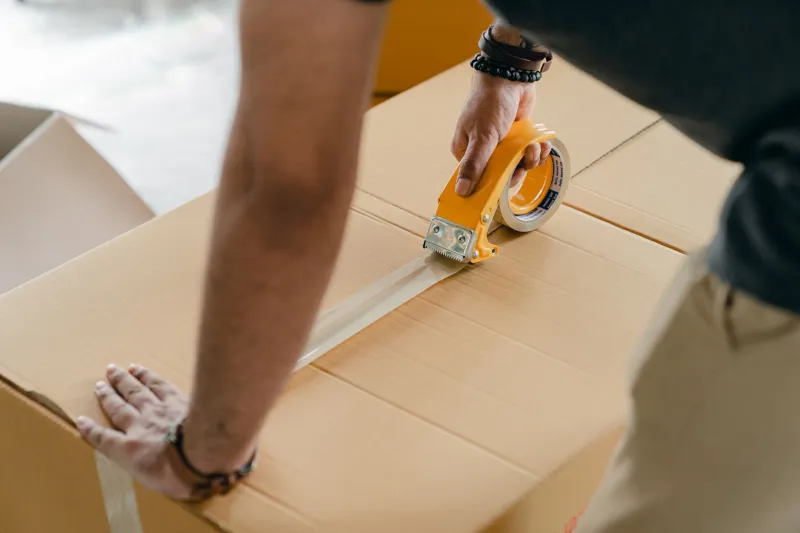
Moisture is the other practical concern. Outdoor locker banks can suffer condensation, and customers may collect parcels in rain. Water-resistant outer packaging helps, but it is not a substitute for adequate board and sealed seams. Tape and labels should be specified for the conditions they will meet, including cold weather. A parcel that arrives at a locker with lifted tape or a curled label creates avoidable work for the carrier and a poor experience for the customer.
Labels that scan first time
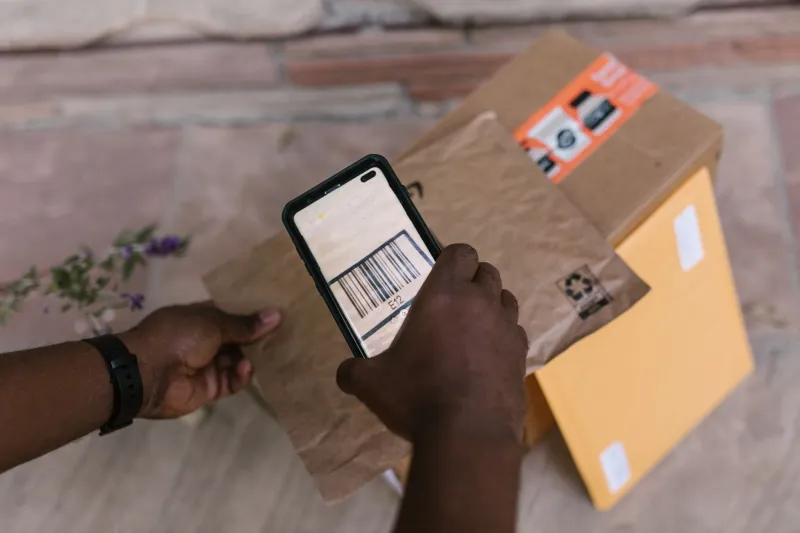
The barcode is the parcel's passport through the locker network. Place it on the largest flat face, away from seams, corners and curved surfaces. Avoid covering it with reflective tape, and preserve the quiet zone around the symbol. If a case is reused, remove or obscure old labels completely; a previous barcode can confuse a scan at the locker or counter.
Label placement should be standardised across the packing bench. A simple template or marked zone on the box helps temporary staff and reduces variation. For click-and-collect orders, the collection reference should be clear to staff but should not expose sensitive order details to other customers. The label needs to work at arm's length, in artificial light, and through the plastic window of a locker door.
The presentation and returns trade-off
A locker or counter collection is a handover, and the customer carries the parcel home. Packaging that is difficult to open, excessively large or heavily branded can undermine the convenience that led the customer to choose collection in the first place. Right-sizing reduces cost and fit risk at the same time. A tear strip or easy-open feature helps, and a resealable design supports returns without requiring a new outer box.
There is a balance to strike. Over-packaging may protect the product but can push a parcel into the next compartment size or make it awkward to carry. Under-packaging may fit neatly but fail under compression. The answer is a specification that is tested as a complete parcel, not a collection of components chosen in isolation.
A practical specification checklist
- Confirm current compartment dimensions for every locker network and collection counter you use.
- Build a small modular size family around those limits, allowing practical clearance for labels, tape and contents.
- Test filled parcels, not flat-packed cases, against a physical gauge.
- Specify board grade and compression strength for stacked locker dwell, not only single-parcel transit.
- Place barcodes on a large flat face with a clear quiet zone and no reflective covering.
- Standardise label placement at the packing bench and remove old labels from reused cases.
- Include an easy-open or resealable feature where returns are likely.
- Run a live trial with the carrier before peak season and record any failed handoffs.
For UK businesses, the most useful change is to treat the locker compartment and the collection counter as part of the packaging specification, alongside the pallet, the van and the doorstep. A parcel that fits, scans and survives the third handling is not a lucky outcome. It is the result of a brief that accounted for the whole journey.